


Tesla Roadster Test: Elon Musk Reveals a Car That Can Jump and Turn in Midair
Tesla showed a Roadster prototype that briefly took to the air. Here is what its Texas demonstration means for the long-delayed electric sports car.
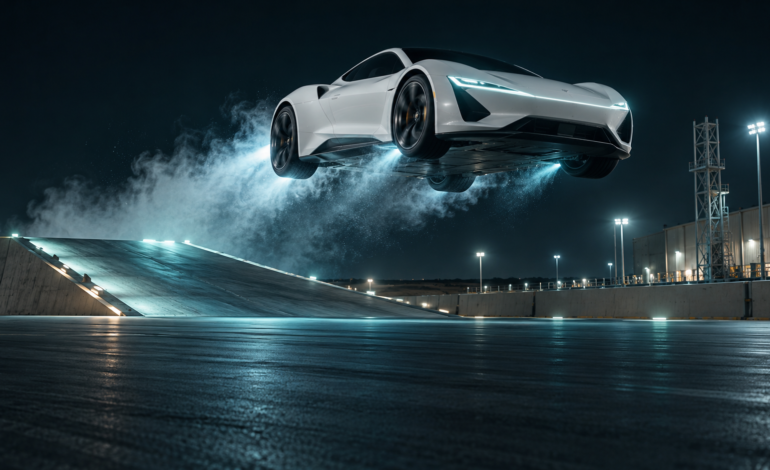

Featured image: AI-generated editorial illustration; not a photograph of the demonstration.
Tesla has finally demonstrated a working version of its long-awaited next-generation Roadster, and it did far more than accelerate down a straight track. During an October 15, 2026, event at a SpaceX test facility in Texas, a prototype drove upside down on a curved ramp, lifted off the ground, turned in midair and landed. A later demonstration sent it jumping over other vehicles.
The event gave Elon Musk a dramatic answer to years of questions about whether the Roadster would ever move beyond its original concept. It also raised a more practical question: how much of the demonstration will translate into a car customers can own and use?
Tesla describes several planned configurations, from a road-ready two-seat sports car to an invitation-only version designed for brief airborne maneuvers. Musk said production is targeted for 2028. That target, the final specifications and the price remain plans rather than settled facts.
What Happened at the New Tesla Roadster Demonstration?
The unveiling took place at SpaceX's testing facility in McGregor, Texas. Tesla used the location to demonstrate technology developed with SpaceX engineers, including a suction system beneath the car and cold-gas thrusters that can push it in different directions.
In one sequence, the white Roadster prototype climbed an inverted ramp while its fan and suction system held it against the surface. It moved through the air and returned to the ground. Tesla also showed the vehicle using its thrusters to clear a line of vehicles. The presentation was a controlled product demonstration, not an everyday driving test on public roads.
How Can the Roadster Leave the Ground?
Tesla describes two principal systems behind the prototype's unusual movement. They serve different purposes, but the demonstration combined them to create effects that an ordinary sports car cannot reproduce.
A Fan System Creates Downforce
The Roadster's multi-mode fan and ground-sealing system pulls air from underneath the vehicle. According to Tesla, this creates downforce even when the car is moving slowly or standing still. More downforce can help the tires maintain contact and traction. In the demonstration, the system helped the prototype stay attached to an upside-down section of the ramp.
For a road or track car, the more practical application may be improved grip rather than inverted driving. Tesla says active wings and different aerodynamic modes can change how the vehicle behaves under different conditions. These are company descriptions; independent testing of a customer-ready Roadster has not yet established how the complete system performs in normal use.
Cold-Gas Thrusters Add Directional Force
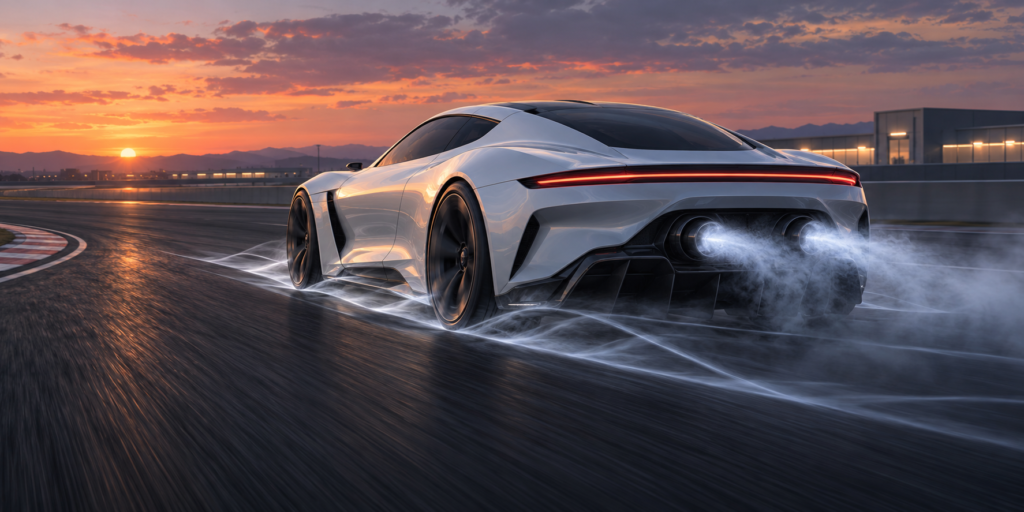
The more surprising feature is a set of cold-gas thrusters. Tesla says they can provide force to help the Roadster accelerate or adjust its position. On the most extreme configuration, thrusters around the vehicle are intended to support upward movement and rotation.
“Cold gas” does not mean the car burns rocket fuel to leap into the air. Reports from the unveiling describe thrusters fed by highly pressurized gas. The system is nevertheless a complex addition to a car, with questions about packaging, repeated use, maintenance and where it could legally operate. The demonstration showed a brief airborne maneuver, not sustained flight or a practical way to travel above traffic.
Three Roadster Versions, Three Different Expectations
One reason the reveal can be confusing is that “the new Roadster” refers to several planned versions. A feature shown by the most extreme prototype should not automatically be assumed to be available on the standard road car.
Performance: The Road-Ready Version
Tesla describes Performance as a two-seat Roadster intended for the road. Its active aerodynamics and suction system are designed to increase downforce and improve performance. This is the version closest to a conventional electric sports car, although final equipment, price and delivery details remain subject to change.
Thrust: A Track-Focused Step Up
The Thrust version is described as a limited-release, two-seat configuration. Tesla says it adds rear-mounted cold-gas thrusters to the aerodynamic and suction systems. The company associates this configuration with a zero-to-60-mph claim of under one second.
That is an extraordinary figure, but readers should separate a manufacturer's claim and a prototype demonstration from an independently verified production-car result. Final performance depends on the vehicle sold, its tires, the test surface and the measurement method. A quick run at a launch event is a milestone; it is not a full road test.
Rocket: The Airborne Showpiece
The Rocket version is most closely associated with the flying-car headlines. Tesla describes it as an invitation-only, single-seat configuration with thrusters positioned around the vehicle for upward and rotational movement. Tesla's Roadster page says this version is not approved for public road use.
That makes Rocket a different proposition from a two-seat car someone might buy for ordinary driving. Availability may depend on regional laws. For now, it is best understood as an ambitious performance project whose practical uses remain limited and uncertain.
How Fast Is the New Tesla Roadster?
Tesla executives said at the unveiling that the Roadster could reach more than 230 mph, travel more than 300 miles on a charge and accelerate from zero to 60 mph in less than a second in a thruster-assisted configuration. Tesla-reported times from prototype acceleration demonstrations were around or below one second.
These figures attract attention, but they are not a complete set of independently verified specifications for every version. Tesla has not announced a final customer price, and the extreme Rocket configuration differs substantially from a road-ready two-seater. Range and performance claims should be checked again when production cars are available for independent testing.
Why Has the Roadster Taken So Long?
Tesla first presented the second-generation Roadster in 2017, with an initial ambition to begin deliveries in 2020. That schedule slipped repeatedly. The 2026 demonstration is significant because the company showed a moving prototype performing unusual maneuvers in public, years after the original reveal.
It is also a reminder that a successful unveiling and a production launch are separate milestones. Building a small number of demonstration vehicles is different from manufacturing, supporting and delivering cars to customers. Musk's current target is to start production in 2028, but Tesla's history with this model gives readers reason to follow actual manufacturing progress before treating that date as guaranteed.
Is This Really a Flying Car?
It depends on what “flying” means. The demonstrated Roadster became airborne and used thrusters to influence its movement before landing. That is remarkable for a car. It is far removed from an aircraft that can take off, travel through the air for a useful distance and operate as a routine transport option.
The clearest description is that Tesla demonstrated brief, controlled airborne maneuvers. Calling it a flying car without that context could lead readers to expect something Tesla has not demonstrated. Rocket's lack of public-road approval adds another practical boundary. The demonstration did not answer how often the maneuver could be repeated, where it would be permitted or how owners would maintain the system.
What Still Needs to Be Proven?
The reveal answered a basic question: Tesla has a Roadster prototype capable of performing the maneuvers shown at the event. Several important questions remain open.
The first is production. Tesla must turn demonstration hardware into a vehicle it can build consistently. The second is independent performance testing. Outside tests will help establish how the finished versions accelerate, handle, brake and deliver range.
The third is real-world use. Owners will need clear answers about maintenance, safety, legal restrictions and where any thruster-assisted features can operate. Finally, Tesla has yet to announce a final price for the new Roadster. A reservation or an impressive reveal does not resolve what a customer will ultimately pay or when the car will arrive.
Why the Roadster Matters for Tesla
The October demonstration was striking because it showed a car doing things that sound improbable in a product announcement. Its long-term importance will depend on what follows the spectacle: final specifications, credible independent tests and cars delivered to customers. Until then, the new Roadster is an impressive prototype with a bold production plan, rather than a proven revolution in everyday transport.
Frequently Asked Questions
Did Elon Musk personally test-drive the new Roadster?
The October 15 event was a Tesla demonstration presented by Musk. Reports describe prototype maneuvers at the facility; they do not establish that Musk personally drove the car during those sequences.
Can the Tesla Roadster fly?
Tesla demonstrated a prototype briefly leaving the ground and turning in midair. That does not mean it can operate like an aircraft or provide regular airborne transportation. Tesla associates the most extreme capability with its Rocket version.
Is the flying Roadster legal to drive on public roads?
Tesla says the invitation-only Rocket version is not approved for public road use. Rules and availability for other features may differ by region.
When will the new Roadster be available?
Elon Musk said Tesla aims to begin production in 2028. Given the model's previous delays, that is a target until manufacturing and deliveries are confirmed.
