

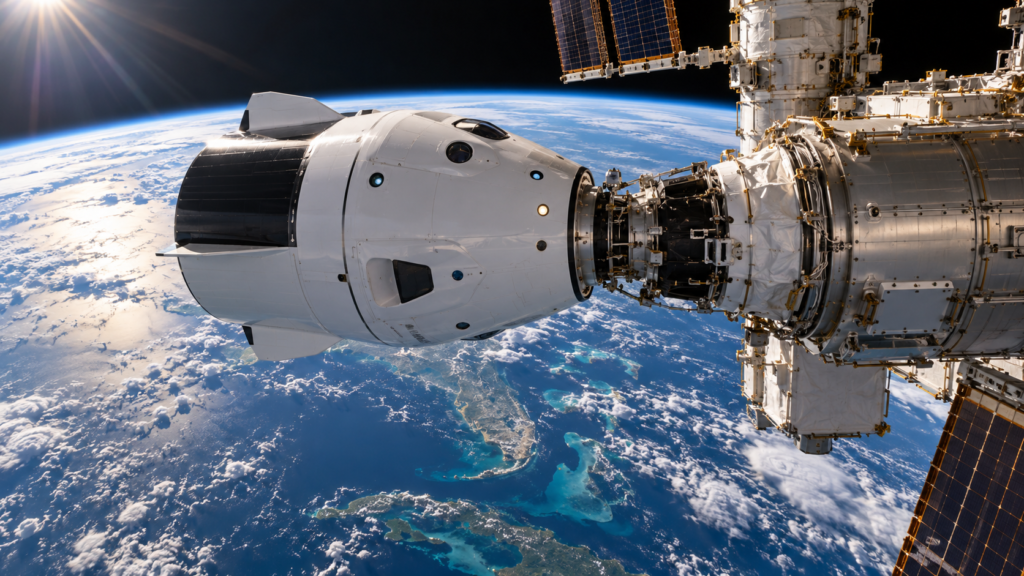



NASA Expands SpaceX Crew Missions as Commercial Space Keeps Growing
NASA awarded SpaceX three additional crew flights to the International Space Station in September 2026 as commercial human spaceflight continues to expand.
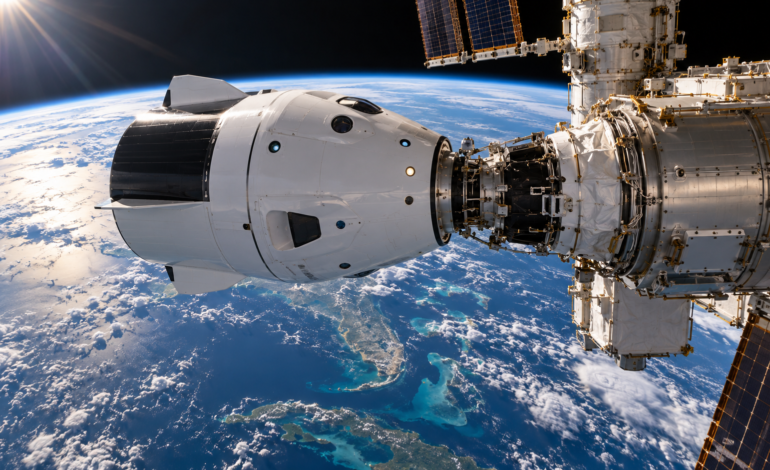

Featured image is illustrative.
Commercial spaceflight has moved from experiment to infrastructure. NASA’s decision in September 2026 to award SpaceX three additional crew transportation missions to the International Space Station reinforces how deeply private launch providers are now embedded in the agency’s human-spaceflight program.
The three additional flights bring SpaceX’s contracted Commercial Crew Transportation Capability missions to 17, according to NASA. They are intended to support continued crew rotation to the station. While the ISS era is approaching its final years, reliable transportation remains essential for scientific research, maintenance, international cooperation, and the transition toward future commercial destinations in low Earth orbit.
How Commercial Crew Changed NASA Operations
For decades, NASA owned and operated most of the systems used to carry its astronauts. The Commercial Crew Program changed that model by contracting private companies to develop and operate transportation services that meet NASA safety requirements.
SpaceX’s Crew Dragon became the first U.S. commercial system to carry NASA astronauts to orbit. Regular missions have since made commercial crew transport a normal part of station operations rather than a novelty.
Why More Missions Are Needed
The International Space Station requires a continuous human presence. Crew rotations must be planned years ahead so that spacecraft, launch schedules, training, and station operations line up.
Additional contracted missions give NASA more flexibility as it manages the remaining life of the ISS and prepares for what comes next. The station is still used for research in microgravity, technology demonstrations, Earth observation, and studies related to long-duration human spaceflight.
| What’s changing | Why it matters | What readers can do |
|---|---|---|
| NASA contracted three more SpaceX crew flights. | Crew rotation and station research need reliable transportation. | Follow NASA mission updates for actual flight schedules. |
The Transition Beyond the ISS
NASA has been encouraging development of commercially operated space stations that could eventually host government and private customers. The goal is to avoid a gap in U.S. access to low Earth orbit after the ISS is retired.
Commercial crew experience is important to that transition. A future in which multiple private stations operate in orbit will require dependable launch, docking, life-support, cargo, and crew-transport services.
Why This Matters Beyond NASA
A mature commercial launch market can lower barriers for universities, research institutions, private companies, and international partners. It can also support new services in communications, manufacturing, Earth observation, and space science.
The industry still faces high costs, technical risk, and regulatory complexity, but the direction is clear: government agencies are increasingly acting as customers and partners rather than the sole operators of space infrastructure.
What Comes Next
The next few years will be shaped by two parallel priorities—keeping the ISS safely productive and building the systems that will replace it. Crew transportation is one of the connective pieces between those eras.
NASA’s latest SpaceX award is therefore more than a routine contract action. It is another marker of a structural shift in how human spaceflight is organized, funded, and delivered.
Frequently Asked Questions
What did NASA award SpaceX in September 2026?
NASA awarded SpaceX three additional crew transportation missions to support continued flights to the International Space Station.
Why does NASA use private companies for crew flights?
Commercial contracts allow NASA to purchase transportation services while focusing agency resources on exploration, research, and mission oversight.
Is the ISS still operating?
Yes. The station remains active, although NASA and its partners are planning for an eventual transition to new low-Earth-orbit platforms.
Will commercial stations replace the ISS?
That is the goal of several development programs, but timelines and final station configurations are still evolving.
Conclusion
The story around NASA SpaceX crew flights is still developing. What is already clear is that the technology and infrastructure involved are moving from niche conversations into mainstream systems, making reliability, transparency, and public accountability increasingly important.
Sources
Disclaimer
The information provided on Pen Liberty is for educational and informational purposes only. It should not be treated as medical, legal, financial, or other professional advice. Readers should verify time-sensitive details and seek qualified guidance where appropriate.
