


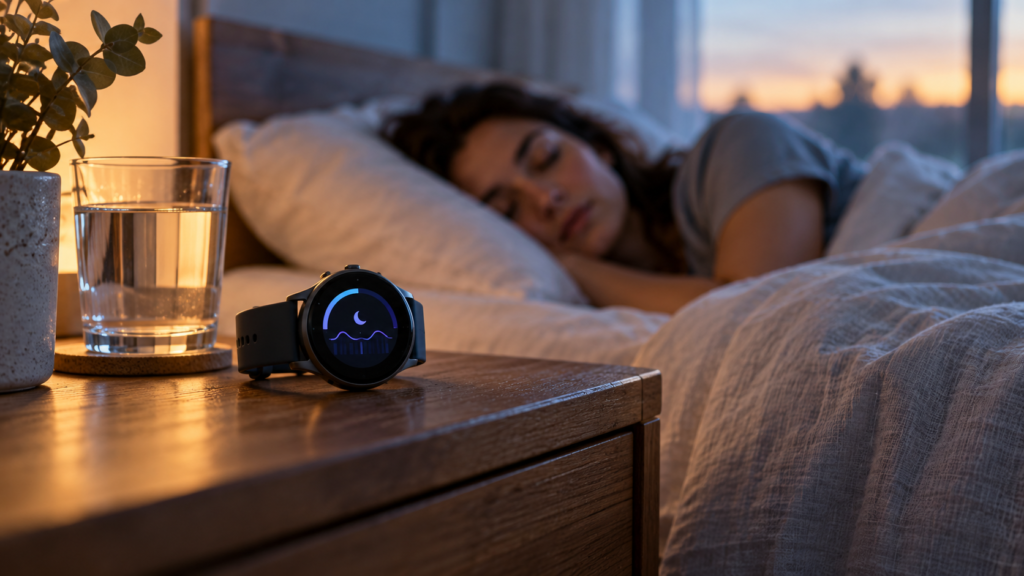
Sleep trackers have become one of the most popular features on smartwatches, rings, and fitness bands. They can estimate sleep duration, detect movement, and increasingly deliver behavioral prompts intended to help users build better routines.
The obvious question is whether these devices do more than measure sleep. A 2026 systematic review and meta-analysis of randomized controlled trials looked at wearable digital interventions for people with insomnia and found a more nuanced answer: some sleep outcomes improved, while others did not.
What the New Research Found
The review included 16 randomized controlled trials involving 910 participants. Across the studies, wearable digital interventions were associated with a modest reduction in objective sleep-onset latency and improvements in subjective sleep efficiency and total sleep time.
The researchers also reported that the overall insomnia severity index did not show a clear improvement. That distinction matters. A device may help with certain components of sleep without meaningfully changing the full clinical picture of insomnia.
Why Wearables Can Still Be Useful
Wearables can make sleep patterns more visible. For some people, seeing consistent bedtime drift, short sleep duration, or irregular schedules can create the feedback needed to change habits.
Digital interventions can also deliver reminders, relaxation exercises, structured routines, and behavioral coaching. These features may be especially helpful when they support evidence-based habits rather than encouraging users to obsess over nightly scores.
| What’s changing | Why it matters | What readers can do |
|---|---|---|
| Research is moving toward more personalized, evidence-based use of health technology and treatment. | A single metric rarely tells the whole story; outcomes such as sleep, function, strength and safety matter. | Use trends as a starting point, then apply them with clinical context and realistic habits. |
The Problem With Chasing a Perfect Sleep Score
Sleep data can be useful, but it is not exact. Consumer devices infer sleep stages from signals such as movement, heart rate, and temperature rather than measuring brain activity in the same way as a clinical sleep study.
For some users, constant tracking can also increase anxiety. A poor score may cause a person to assume they slept badly even when they feel rested. Sleep specialists sometimes use the term “orthosomnia” to describe an unhealthy preoccupation with optimizing tracker data.
What Still Works Best for Chronic Insomnia
For persistent insomnia, cognitive behavioral therapy for insomnia—often called CBT-I—remains a first-line treatment. It targets the behaviors and thought patterns that keep insomnia going and has a stronger clinical evidence base than consumer sleep tracking alone.
Wearables may be most useful as an adjunct: a way to notice patterns, reinforce a schedule, or support a broader treatment plan. They should not be used to self-diagnose sleep apnea, neurological disorders, or other medical conditions.
How to Use Sleep Wearables More Wisely
Focus on trends across several weeks rather than one night. Pay more attention to regularity, total sleep opportunity, daytime energy, and how you actually feel than to a single proprietary score.
If snoring, choking during sleep, extreme daytime sleepiness, persistent insomnia, or unusual nighttime behaviors are present, a clinical evaluation is more appropriate than simply upgrading the device on your wrist.
Frequently Asked Questions
Can a smartwatch diagnose insomnia?
No. It can provide estimates and patterns, but insomnia is a clinical condition assessed from symptoms, duration, and functional impact.
Are sleep stages on wearables accurate?
They are estimates. Accuracy varies by device and is generally less precise than laboratory polysomnography.
Can wearables help me fall asleep faster?
Some digital interventions appear to modestly reduce sleep-onset time, but results vary and the effect is not guaranteed.
Should I stop tracking if it makes me anxious?
Yes. If tracking increases worry or causes you to chase scores, using the device less often—or not at all—may be healthier.
Conclusion
The evidence on whether wearables improve sleep is developing quickly, but the most useful interpretation is measured rather than absolute. New tools and treatments can be valuable when they are combined with sound habits, appropriate medical guidance, and attention to outcomes that matter in daily life.
Source
2026 systematic review and meta-analysis (JMIR).
Disclaimer
The information provided on Pen Liberty is for educational and informational purposes only. It should not be treated as medical, legal, financial, or other professional advice. Readers should verify time-sensitive details and seek qualified guidance where appropriate.